
Victor Saly's own thought, from a voice note of 23 October 2026, tidied and structured with AI. The original is kept as written.
Talked out loud, tidied by AI
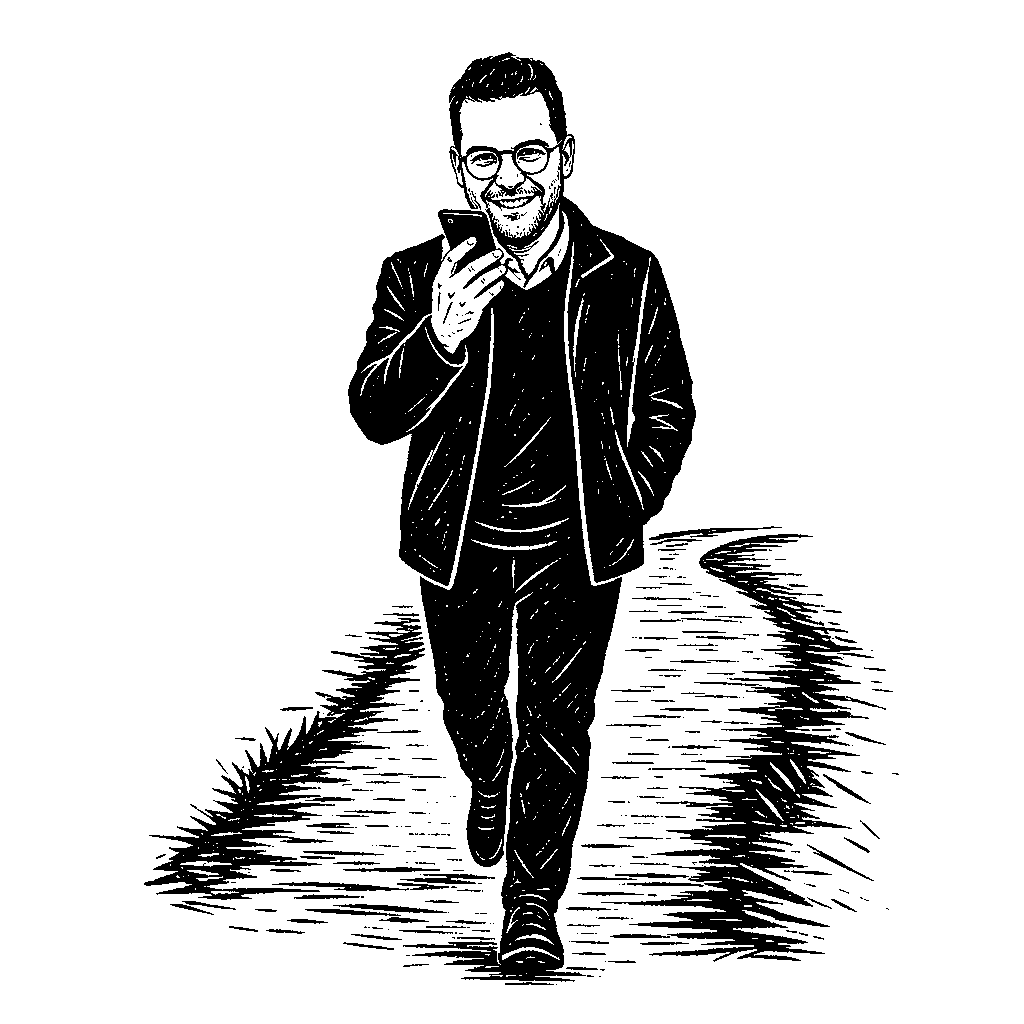
The idea
Every post on this blog starts as a voice note. I talk into my phone, badly, and that recording is kept exactly as it was spoken. It is the origin, and it is never edited.
Everything else is a conversion. The short version, the long one, the LinkedIn post, another language, a picture, a voice you can listen to. Each carries a small badge, “Talked out loud, tidied by AI”, and the badge is a link back to the origin. You can always see where a thought came from.
The blog is a map, not a list. Me in the middle, a few themes around me, small ideas hanging off them. An idea can belong to two themes, because that is how ideas work.
Agents do the converting, one job each. One asks me the questions a reader would ask before anything is written. One learns how I talk and keeps every other agent honest about it. Two can only say no: one for hate and harm, one for security and other people’s data. I decide what merges.
Every file carries a short why. Every post ends with what changed from the origin, and why. Be yourself first; let the tools route it after. This is the first post, and it was built this way.
The origin
Recorded 23 October 2026, one voice, never edited. It starts like this:
Origin 1 — the idea So I have this idea where I'm thinking that it would be good that every time that I got those ideas where I want to do a post, they are in one before and after. So I want to create a GitHub project where I got a blog where I just express my ideas very,…
The road
Every post should have a before and an after
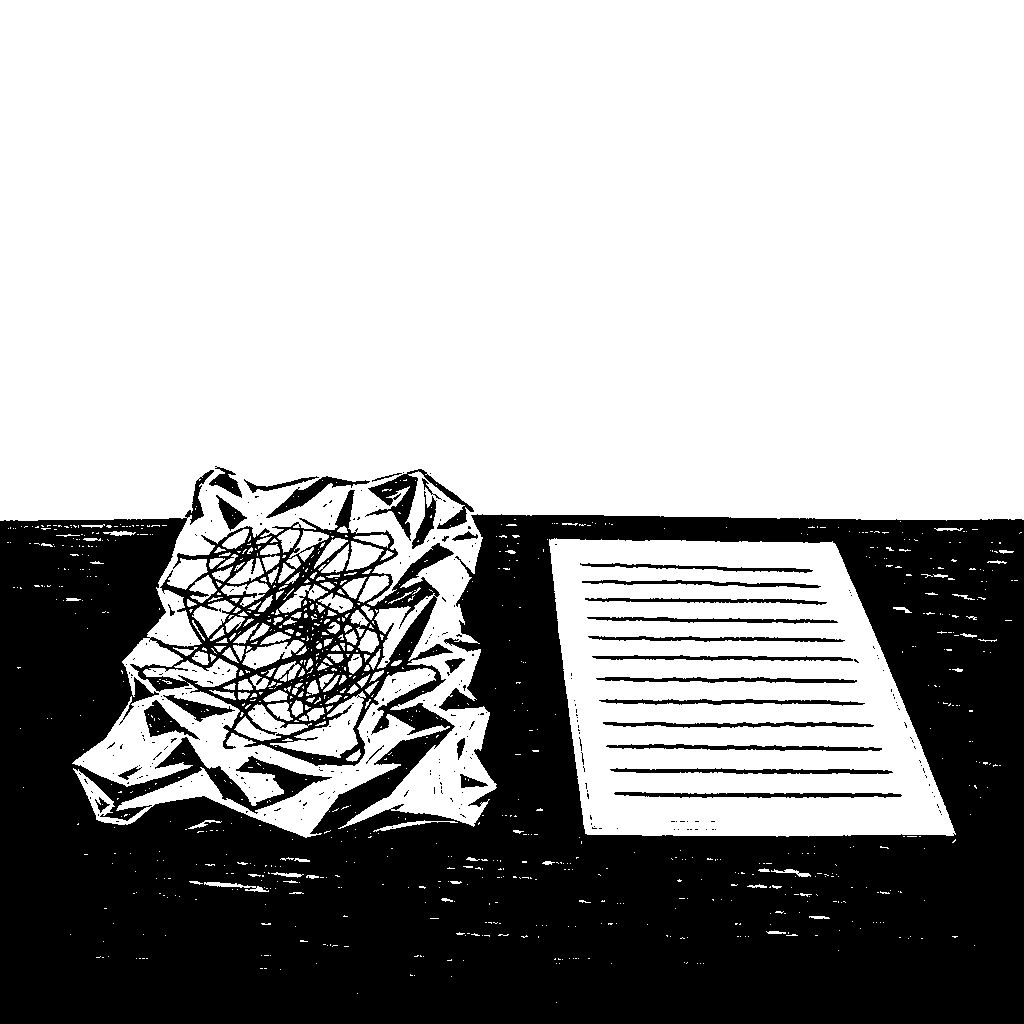
“The before and the after, side by side.”
Two sheets of the same paper, one messy and one tidy, put next to each other to show that both are kept and both are mine.
Most of my ideas arrive in a mess. I am reading a book, or walking, or halfway through something else, and a thought lands. I grab my phone and talk into it. Half sentences, repeated words, feelings mixed in with the point. That recording is the most honest version of the idea I will ever have.
Then I want to share it, and the mess is a problem. It needs to be shorter, or longer, or clearer, or aimed at a particular group of people. So I run it through AI and out comes something readable. And here is the part that bothers me: the readable version gets published, and the honest version disappears.
So this is the idea. One place where the messy thought lives, exactly as it came out. Every polished version, the article, the short post, the translation, points back to it with a link. Anyone can go and see where it came from. And if it matters, a few lines on why the change was made.
The before and the after, side by side. The before is mine. The after is mine too, just converted.
The rusty version is the real one
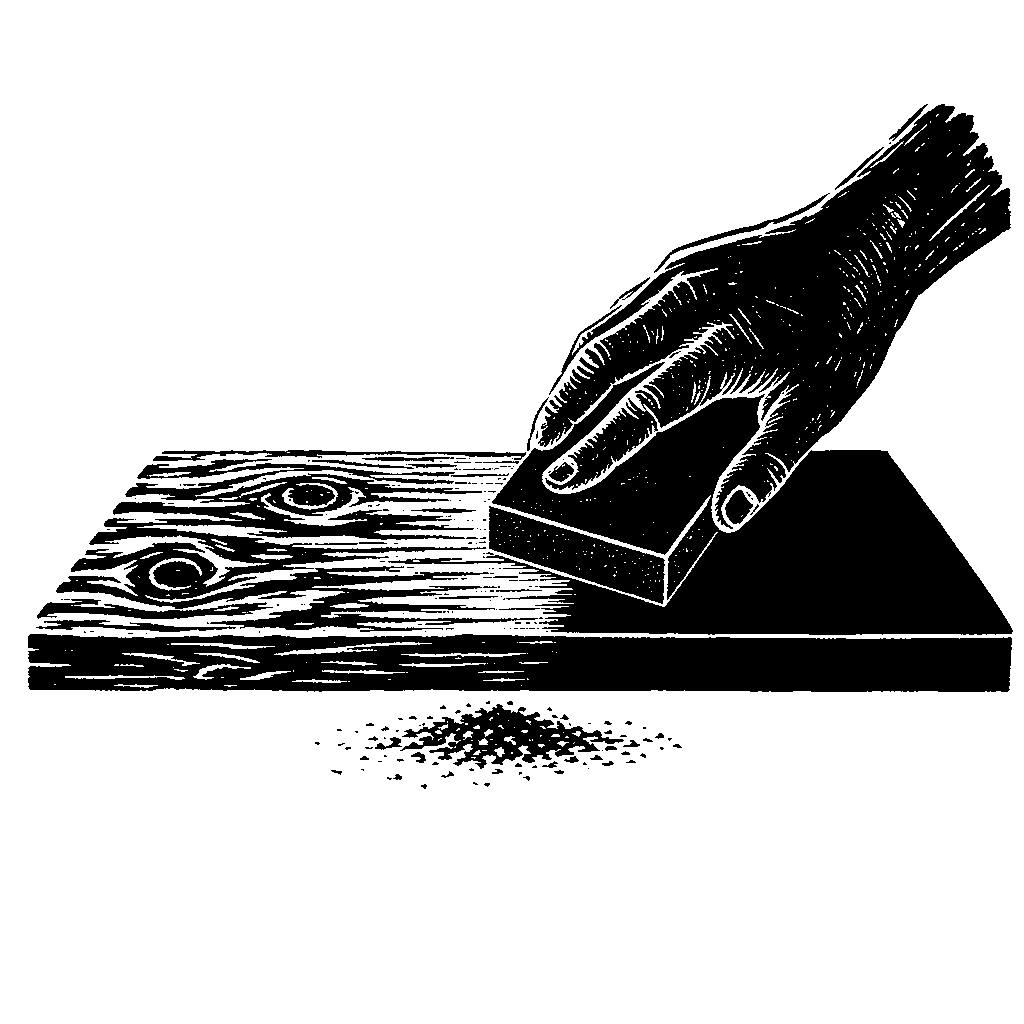
“The rough edges were the proof it was human, and I sanded them off.”
The half-sanded board shows what polishing costs: the smooth side looks like every other board, and the rough side is the one that carries the marks of a person.
I know my ideas are mine. They come from a mix of things only I have lived through: the books I read, the work I do, the way I speak, the languages in my head. Nobody else would put those things together the same way. That mix is what makes a thought worth sharing in the first place.
But when the polished version is all anyone sees, it starts to feel generated. Not because it is, but because polished things all look alike. The rough edges were the proof it was human, and I sanded them off.
So I want to keep the rough edges somewhere. Not hidden in a notes app, but published, next to the clean version, as the thing I am proud of. I want my thinking to be written the way I would have written it five or ten years ago, before any of these tools, and then refined on top of that. The refining makes it reach more people. The origin is what makes it worth reaching them with.
That is the whole point. Keep the uniqueness. Convert the delivery.
Talked out loud, tidied by AI
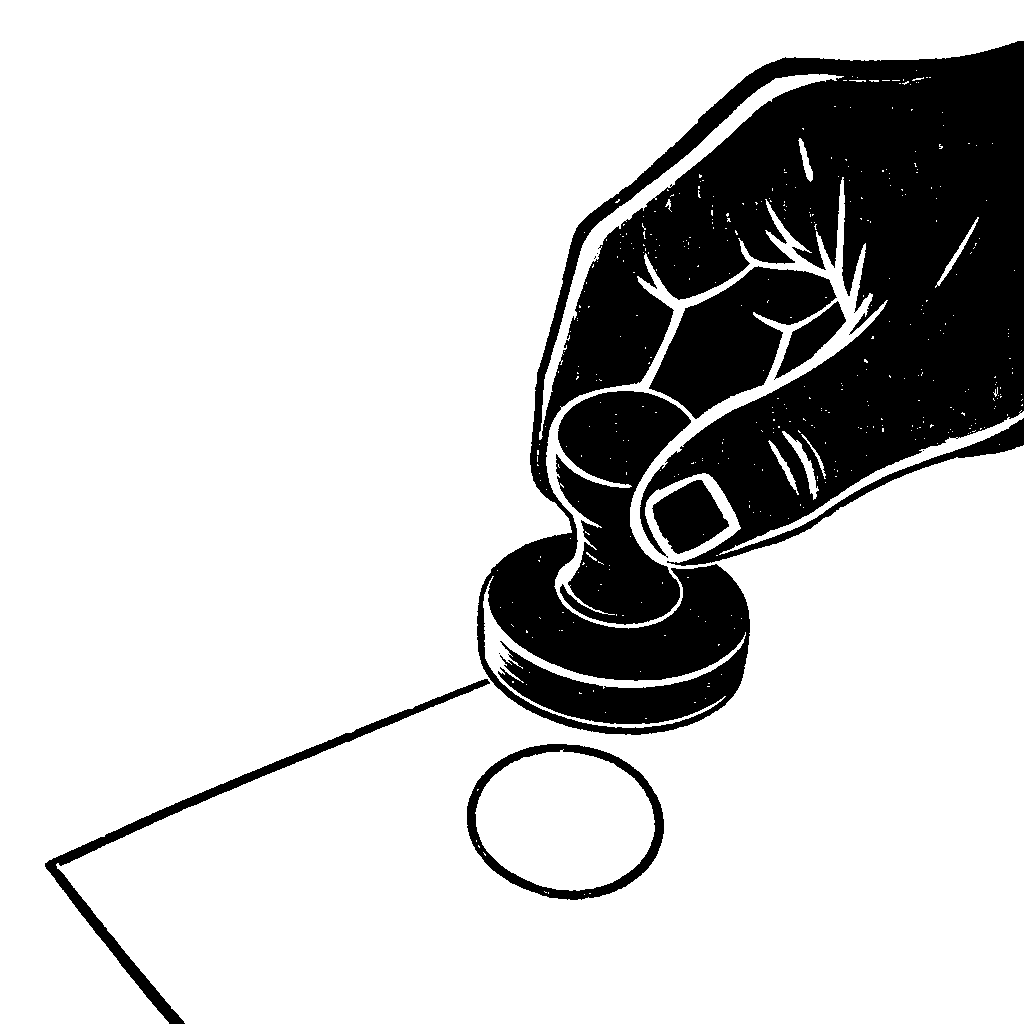
“I want a small badge on everything I publish.”
A stamp on a page is a small, visible mark of what happened to it, which is how the badge works: it says the page was handled, and it stays on the page.
I want a small badge on everything I publish. Not “made with AI”, which sounds like the machine had the idea. “Converted with AI”, which says what actually happened: a human had a thought, and a tool changed its shape so more people could receive it. The badge is a link. Click it and you land on the origin.
From one origin, a reader can pick the version they want:
- The raw note, as it came out of my mouth. Messy, honest, no editing.
- A short version, for when you have a minute.
- A long version, when the idea deserves room to breathe.
- The same thing in another language, so my family and friends who do not read English get the thought and not a translation of a translation.
- A post shaped for one place, LinkedIn or wherever else, written for the people who are there.
Every one of those is a conversion. Same core, different shape. And none of them pretends to be the origin.
There is a pride in that I did not expect. Using the tool openly, with the source one click away, feels better than hiding it. It turns the AI from something I am slightly ashamed of into something I am clearly in charge of.
How it works
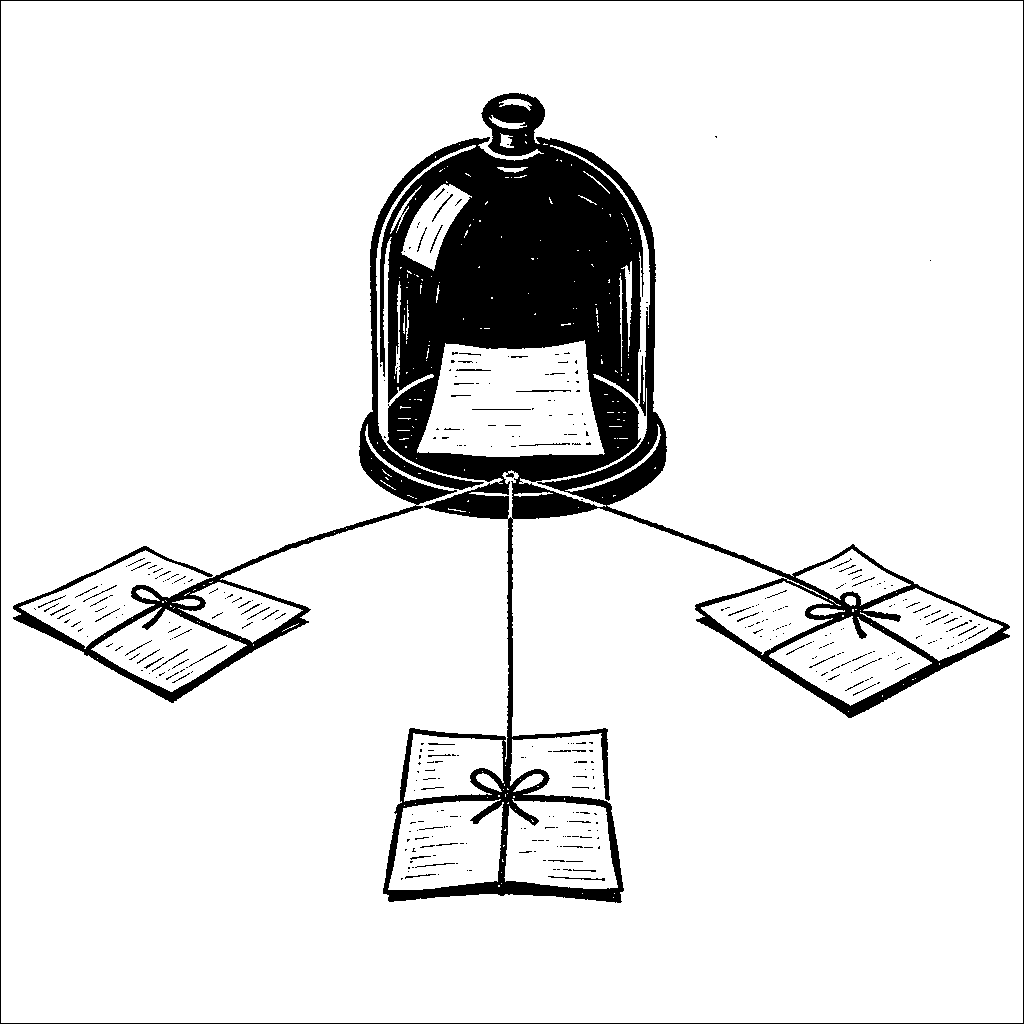
“One voice note becomes one origin, and the origin is never touched again.”
The sheet under glass is the origin that nobody touches, and the threaded sheets are the conversions that always lead back to it.
One voice note becomes one origin, and the origin is never touched again. Everything below it is a conversion, reviewed by me before it goes out, and every conversion carries the badge that leads back up.
voice note ─(transcribed)─▶ origin ─▶ convert with AI ─▶ short · long · LinkedIn · another language
                               ▲                              │
                               └── "Converted with AI" badge ─┘   (reviewed and merged by me, then published)
From one voice note to a published post
- Voice noteSpoken into the phone, half sentences and all.
- Transcribed as the originNever touched again.
- Convert with AIShort, long, LinkedIn, another language.
- Reviewed by meNothing goes out before I read it.
- Published with the badgeThe badge links back to the origin.
A graph you can walk
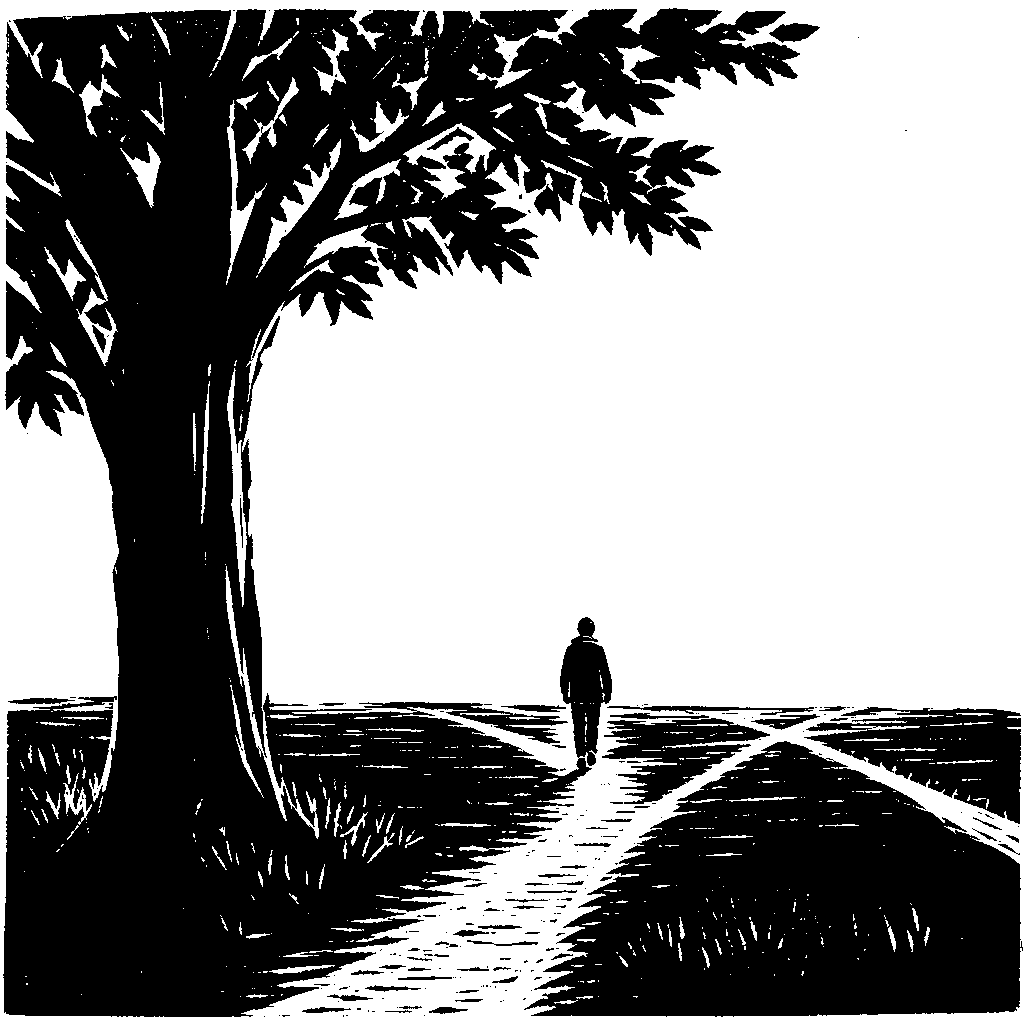
“You start at the centre and walk outwards”
The tree is the centre and the forking paths are the themes and ideas, drawn as ground a person walks on instead of as a diagram.
A voice note is rarely about one thing. Twenty minutes of talking can hold five ideas, and two of them belong to topics I have written about before. A list of posts cannot show that. A graph can.
So the blog is not a list, it is a map. In the middle is me, the way I think and the things I have lived through. Around me, a handful of themes, the words that keep coming back. Hanging off the themes, the small ideas, each one cut out of a bigger note and small enough to read in a minute. An idea can hang off two themes at once, because that is how ideas actually work.
The graph is the thing I want to be unlike anything else. Not a feed, not a timeline. You start at the centre and walk outwards, and the shape of it tells you who I am before you have read a word. And when my focus moves, a new theme appears, and the old ones stay where they were.
Show the road, not just the building
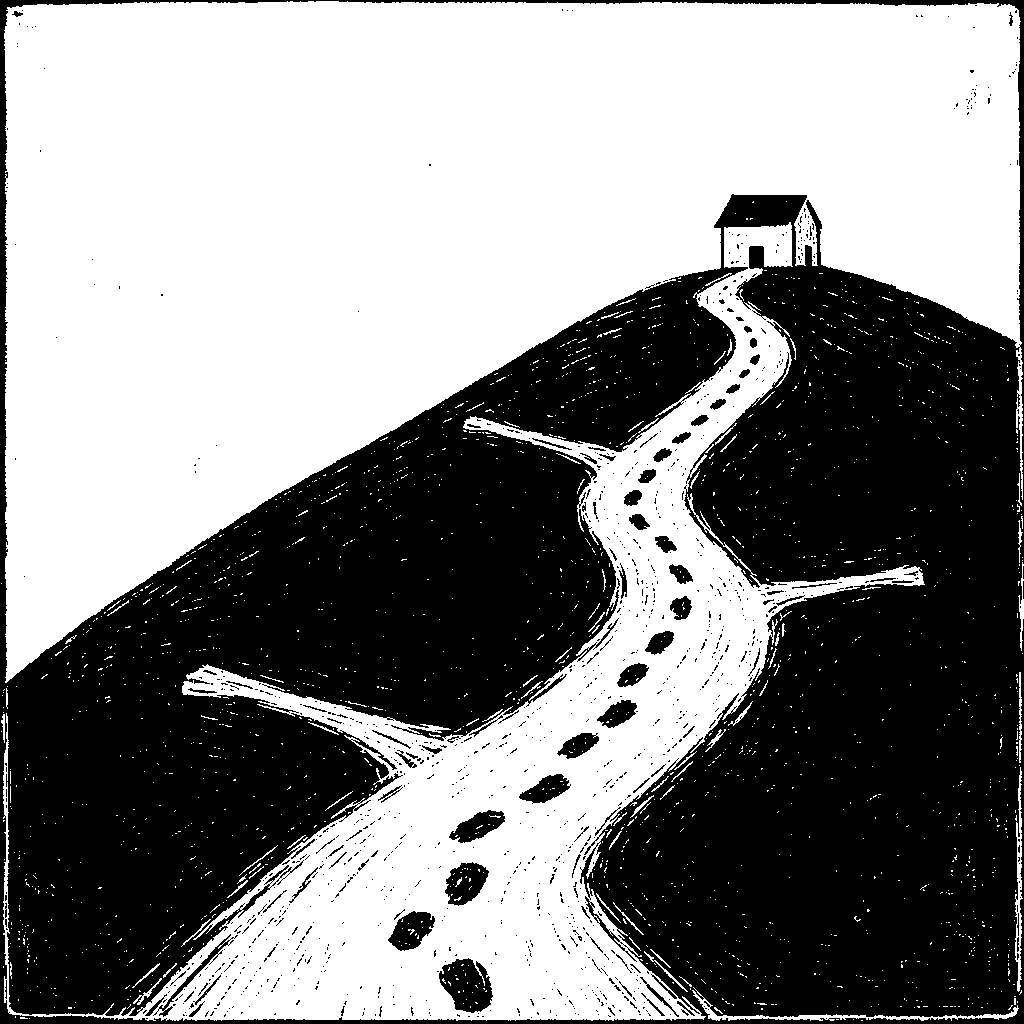
“What proves something is the road”
The house is small and the road takes up most of the picture, with its dead ends included, because the road is what the section says proves the work.
Before, the thing you built was the proof. Now anyone can build the thing in an afternoon, so the thing alone proves very little. What proves something is the road: why you went that way, what you tried and threw out, how you checked the result before you trusted it.
With generative AI that explanation stops being a nice extra and becomes the work. The human explanation of the orchestration. Which prompts, in which order, what the tool got wrong, what I corrected and why. For people who care about results, that is the part they can actually judge. For people who want to learn, it is the only part they can copy.
And that is the second thing I want from the road: repeatability. Not repeating the output, repeating the skill. If I can explain how I got from A to B on one topic, I can take the same way of working to a completely different topic tomorrow. The core stays, the subject changes. That is how a way of thinking grows instead of a pile of posts.
Right now most of my subjects are about AI and how my work is changing. How to make it serve the people I work for, with accountability, credibility, something scalable and secure, built as a tool that is agnostic and easy to drop into any situation in my corner of the world: applications, routines and workflows for the organisations I build for. Tomorrow the subject might be something else entirely. The road will look the same.
What proves something, before and now
The building
- The thing you built was the proof
- Now anyone can build it in an afternoon
The road
- Why you went that way
- What you tried and threw out
- How you checked the result
- The part others can copy
Every claim gets a door out
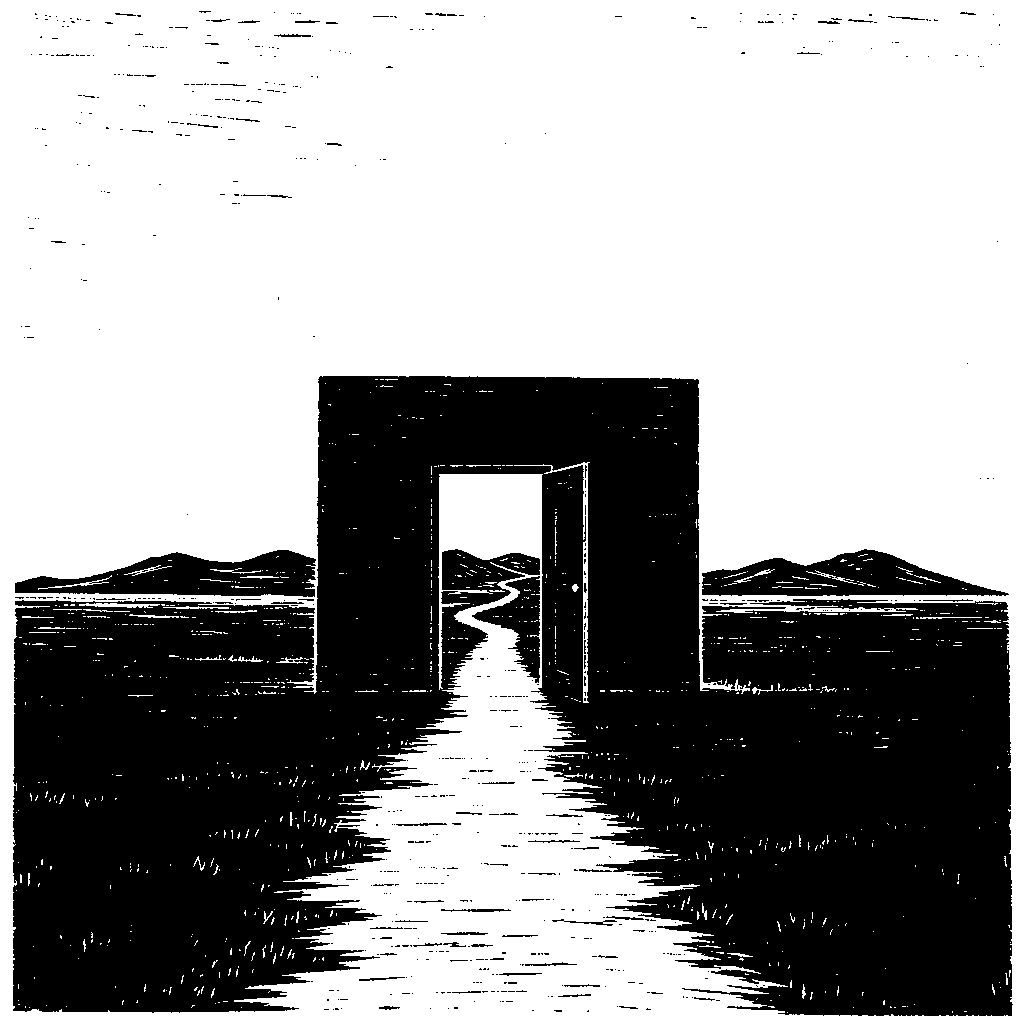
“Not a wall of references at the bottom, a door in the sentence, right where the name appears.”
A wall with one open door, set where the path needs it, shows a source as a way out of the sentence and not as a list at the bottom.
When I say something, there should be a way to check it. Not because I expect to be doubted, but because a thought with a source is worth more than a thought without one, and because the best thing a post can do is send you somewhere better.
So one agent does nothing but citations. It reads what I said and finds what it rests on: the book I half-remembered, the Wikipedia page for the thing I named, the talk on YouTube I saw it in, the blog post or the LinkedIn profile of the person I was quoting. Each one becomes a link. Not a wall of references at the bottom, a door in the sentence, right where the name appears.
That is different from the drill-down pages, which stay inside my site. The doors go out. They take you beyond my space to the original, to the person, to the longer conversation, and let you come back when you are ready. A blog that only points at itself is a wall. I want a crossroads.
And I check the doors before they open. An agent can find a source; it can also invent one, confidently. So every citation is a file in the repo, reviewed like everything else, and a link I have not read does not get published.
Agents that ask before they write
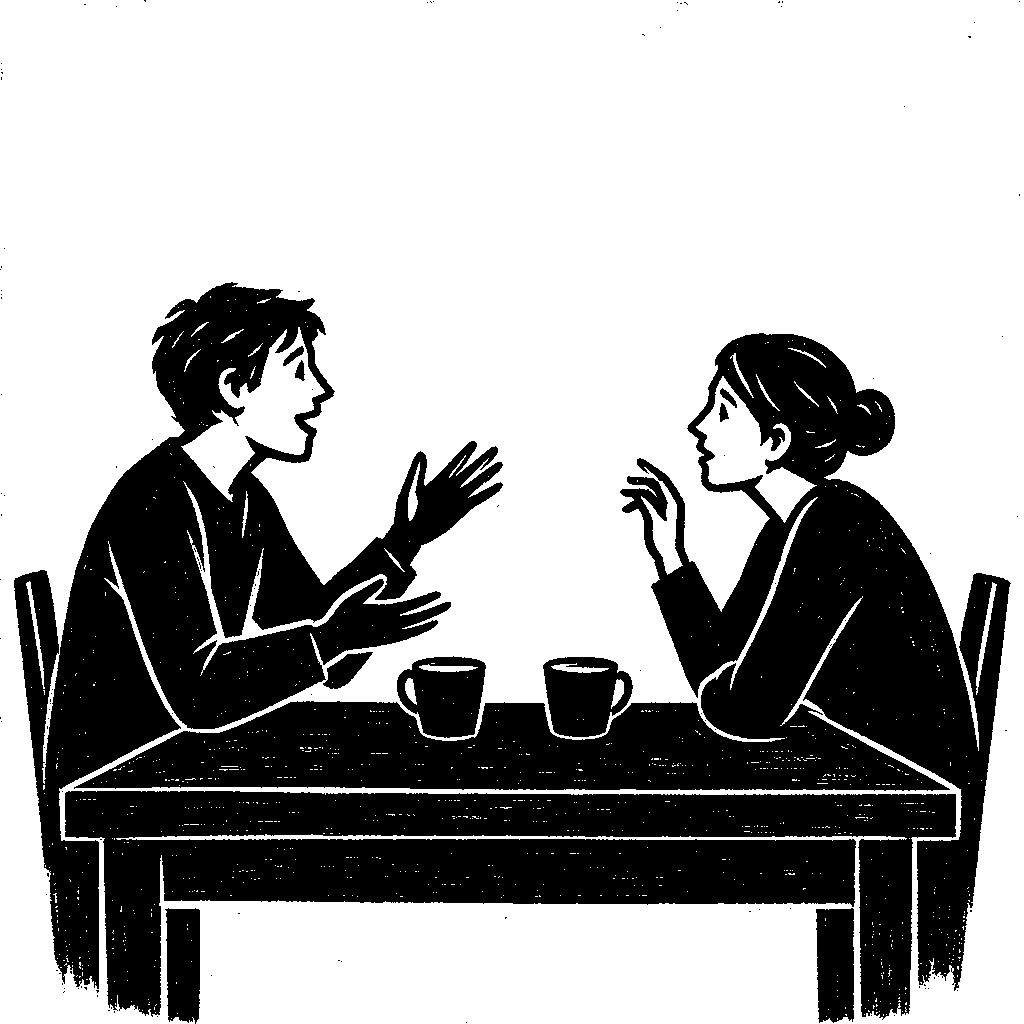
“The questions a good friend asks when you tell a story badly.”
A friend leaning in to ask is drawn instead of a machine, because the section is about the questions that pull out the context only the speaker has.
A raw note is honest, but it is not complete. When I talk about an exhibition that moved me, I know where I was, who I was with, what the room looked like. The listener does not. The note has the feeling and skips the facts.
So I want a private place to start from. A page I log in to, with nothing on it, where I talk. That is the studio, and the raw words that land there are the origin, as always.
Then the first agent does not write anything. It asks. What would you call this? Where were you? When? Who was there? What did you see first? Why did it stay with you? The questions a good friend asks when you tell a story badly. I answer the same way I made the note, by talking. Those answers sit next to the origin, still raw, still mine.
Only then does the structure agent go to work: the message in two lines, the idea in one screen, the road underneath, the small ideas cut out and tagged. The convert agent makes the versions and the languages. The image agent makes one picture. And I read all of it before anything leaves.
The questions matter more than the writing. The writing can be regenerated in a minute. The context, where I stood and what I felt, can only come from me, and only if something asks for it while I still remember.
What happens before anything is written
- I talk in the studioA page with nothing on it. The raw words are the origin.
- The first agent asksWhere were you? Who was there? Why did it stay with you?
- I answer by voiceThe answers sit next to the origin, still raw.
- Structure agentMessage, idea, road, small ideas cut out and tagged.
- Convert and image agentsThe versions, the languages, one picture.
- I read all of itBefore anything leaves.
It should learn how I talk
There is one more agent, and I am not sure yet how it works. It does not write and it does not ask about the post. It learns me.
Every origin is a sample of how I talk: the words I reach for, the ones I repeat, the mistakes I make, the way I circle a point three times before I land on it. Every review is a sample of what I will and will not accept. Over time that is a profile of the blogger, and every other agent should read it before it writes a word, so the short version sounds like my short version, and the other language sounds like me in that language, not like a translation.
Part of the profile I will give it directly. The interview agent can ask about me as well as about the post: where I come from, what I do, what I care about, what I hate to see in my own writing. Part of it comes from the corrections. When I change a word in review, that is a lesson, and the profile should grow by it. The profile is a file in the repo like everything else, so I can read it, argue with it, and fix it.
I want to be careful here too. The point is not an agent that pretends to be me. The point is that when the tool reshapes my words, it reshapes them towards me and not towards the average of everyone on the internet. The profile is the difference between converted and generated.
I am calling the whole thing the agentic blog. Several agents, one job each, one profile they all read, and a human at the start and at the end.
The voice says more than the words
I have been calling the transcript the origin. It is not. The recording is. The transcript is already the first conversion, and like every conversion it loses something.
It loses the pauses. When I stop for a second, that is a full stop. When I stop for half a second, a comma. When I stop for three seconds, I have found the point, and the writing should give it a line of its own. It loses the volume. When my voice goes up, I care about that sentence more than the ones around it, and the text should carry that, not flatten it into the same grey tone as everything else. It loses the feeling. Sometimes I am excited, sometimes tired, sometimes annoyed, and a reader who cannot hear me should still be able to tell.
And it loses who said what. Some of the best thoughts come out of a conversation, two people in a kitchen, one saying something and the other pushing back. The note should know there were two voices, keep them apart, and never put my friend’s words in my mouth.
So the recording stays. Every origin page has a play button next to the text, so anyone can hear the real thing and judge the conversion for themselves. And the agents listen before they read: the pauses become punctuation, the stress becomes emphasis, the feeling gets named where the words alone would miss it, the speakers get their own lines.
I know this takes a settling-in period. The first weeks the tool will get my pauses wrong and my moods wrong, and I will correct it, and the profile will learn. After that it should feel natural: I talk, and what comes out the other side sounds like me, not like a transcript of me.
Talking back to it
Sometimes the output will be fine and still wrong. Well written, nothing to fix line by line, and not what I meant. The whole thing went down a road I did not want. When that happens I do not want to edit sentences. I want to say, out loud, the way I said everything else: this is not the direction, I wanted it more like this, less like that.
So feedback is a voice note too. I talk about the output the way I talked about the idea, and the system treats it as an instruction, not a comment. It reworks the piece. And if the same feedback keeps coming, it changes the route itself: the prompt the structure agent runs, the list of questions the interview agent asks, the line in the profile that was steering it wrong. The complaint fixes the post. The pattern of complaints fixes the machine.
Every one of those changes is a commit I can read. If I ever wonder why the tool writes the way it does, the answer is in the history, in my own words.
Two agents that can say no
Most of the agents make things. Two of them only stop things, and they run last.
The first watches the message. Anything that leaves the site, in any language, gets read for hate, for contempt, for a line that would land on someone as an attack rather than an argument. I do not expect to write those things. I do expect to be tired, or annoyed, or careless in a language that is not my first, and a sentence that sounds sharp to me can sound cruel to someone else. This agent flags it, says why, and the post waits until I have looked.
The second watches the building. It keeps the dependencies current, reads the security advisories the way I would never find the time to, and tells me when something in the stack needs patching. And it checks what goes out for other people’s data. A friend’s name in a recorded conversation, a face in a photo, an email address in a note: none of that leaves the repo until I have confirmed it should, and the rules it checks against are written down so I know what compliant means here.
Neither of them writes a word of the blog. Both of them can hold a post back. That seems like the right balance to me.
Pictures that match the feeling
Words carry the idea. A picture carries the mood, and in the world we scroll through now, the mood is what makes someone stop. So every idea gets one image. Sometimes my own photo, taken in the moment, which is always the better one. Sometimes a picture made by an agent from the words, when I have nothing of my own.
This is where I have to be careful, because the styling is everything. A generated image in the wrong style screams generated, and the whole post slides into the sameness I am trying to avoid. So the image agent gets a house style and nothing else. Monochrome, like the site. Lines and dots, not photographs pretending to be real. The same hand every time, so that when you see one you know where it came from before you read the name. If it does not fit the page, no image is better than the wrong one.
What I want from the pictures is continuity. A post about an art show and a post about a pull request should look like they belong to the same person, because they do. The words change every time. The line stays the same.
What it will look like
Black and white, mostly. One colour, used once on a page, for the thing that matters. Lots of space, short lines, nothing moving unless you asked it to. Minimal and modern, and above all simple, because simple is what lets people in.
I have two readers in mind before anyone else. My daughter is dyslexic. My son finds it hard to hold his attention on a page. If the two of them can open a post and get the message straight away, anyone can. So every idea comes in three depths:
- The message. Two or three lines at the top. If you read nothing else, you got it.
- The idea. One screen, plain words, the short version.
- The road. The full piece, the origin it came from, the conversion notes, and the graph around it.
You go as deep as you want and no deeper. The page never makes you scroll past the point to find the point.
The type is chosen for them too. A clear face, generous spacing, left-aligned, lines that never run too long, and a switch to a dyslexia-friendly font if you want one. Dark mode, big tap targets, everything reachable from a keyboard, and the minimum standards everyone should meet (WCAG 2.2 AA) treated as the floor, not the ceiling. If it does not work for my kids, it is not finished.4
What it will do
Small on the surface, a lot underneath. In roughly the order I will add them:
- Every language I need. Each idea converted into the languages my family and friends read, badge on each, origin language marked.
- The graph as the front door. Start at me and walk outwards, or start at one idea and see what it connects to.
- Search that works. Type a word, find every idea and every origin that holds it.
- Drill-downs. When I mention a book or a person I care about, the name becomes a link to a short page about it. That page is made once with a deep search, reviewed by me, and kept in the repo like everything else. A small wiki growing out of the posts.
- An agent you can talk to. A chat box that only knows what is on the site. Ask what I think about something and get an answer built from my own words, with links to where I said it.
- A place for other people. Comments and shared ideas under each post, so the blog is a centre point, not a broadcast.
- A voice version of every idea. Read aloud, in my voice where I can, so you can listen on the way somewhere instead of reading. The raw note was spoken; the finished one can be heard.
- Video, when an idea earns it. Not every post, and never a talking head reading the text. A short piece in the same monochrome style, lines and dots that move, for the ideas that are easier to watch than to read.
- The social loop. Each idea goes out to social media as the short version, with the badge and a link back. The feed gets the headline. The blog keeps the road.
And the first post is this one: the idea of the blog, spoken into a phone, converted with a tool, and built into something real with the same tool. The site will be its own proof.
How I’ll build it
The blog will live at blog.victorsaly.com, and everything behind it will sit in one GitHub repo. I want to build it with the same tools the idea is about: voice notes in, AI conversions out, the code itself written with an agent while I decide what stays. The repo is the before and after, in the open.
- One folder per thought. Each gets a dated folder with the raw note (the audio and its transcript), a small file with the date, the language it came out in and a few tags, and a versions folder for every conversion. The raw note is never edited after it lands. If I change my mind, that is a new thought, not a rewrite.
- Capture from the phone. I talk into a voice memo, it gets transcribed, and the transcript is committed as the origin. No cleaning up. The spelling mistakes and the repeated words are part of the record.
- Convert with a script, review by hand. A small script reads the origin and a set of prompts, one per target: short, long, LinkedIn, another language. It writes each version as a file with a header that says which origin it came from and one line on why it was changed that way. It opens a pull request. I read it, fix what sounds wrong, and merge. The merge is my decision, with my name on it.
- Build the site from the repo. A static site generator turns the folders into pages, published on push. Each page shows the badge, the version switcher, and the link to the origin. Nothing clever, nothing to maintain at two in the morning.
- The badge. A small “Converted with AI” mark on every converted page, linking to the origin and its conversion note. The origin page carries no badge, because nothing converted it.
- Cut each thought into small ideas, and tag them. The site draws the graph from those tags: me in the middle, themes around me, ideas on the outside, nothing placed by hand. A new theme is one new tag.
- Keep the road next to every conversion. The prompts, the order they ran in, and my notes on what I changed are committed with the versions, not thrown away.
- The studio. A private page behind a login, mine only, with a record button and nothing else.
- Interview before structure. The first agent reads the origin and asks what a reader would need. I answer by voice. The answers are committed next to the origin as a second raw file.
- One picture per idea, in the house style. Monochrome, lines and dots, no photographs.
- The profile. One file, profile.md, at the root of the repo. Every agent reads it before it writes. I read it too, and when it is wrong about me, I fix it.
- Keep the audio, and listen before reading. Transcription with word timestamps and speaker labels, so pauses become punctuation and two voices stay two voices. Feeling is the honest weak spot: tone-of-voice models are still rough, so to begin with the feeling is named from the words and my corrections.
- Feedback as a voice note. A second button in the studio: talk about the output, not the idea.
- Two checks before anything publishes. The safety agent reads every version in every language for hate and harm. The security agent runs on a schedule and scans each post for anything that is someone else’s.
- Findable on purpose. Titles, descriptions, structured data, a sitemap; robots stays at no-index until I flip one setting. Private by default, public by decision.
- Built so the blogger is a parameter. Everything that is about me lives in profile.md and one settings file.
- A why on everything. Every file the agents write starts with a short header: what this is, which origin it came from, and why it was made this way. The build fails if a file has none.
I did think about generating the versions on the fly, at read time, with no files to review. Cheaper and always fresh. But then nobody checked them, including me, and the whole point is that a human did. So the versions live in the repo, reviewed, versioned, and the history shows every change.
The agents, one job each: Interview, Profile, Structure, Convert, Image, Citations, Drill-down, Feedback, Safety, Security, SEO, Publish. And me, who decides.
Mine first, maybe yours later
For now this is for me. One blogger, one profile, one repo, and the search engines kept out until I say otherwise. I want to live in it for a while before anyone else looks, and get my pauses and my moods right before I worry about being found.
But being found matters when the time comes, so one more agent looks after that. It makes sure every page says what it is in the way the search tools and the AI answer engines read: a clear title, a plain description, the structured data that tells a machine this is an article by this person on this date in this language, a sitemap, the right links between the versions. Nothing clever, nothing that tricks a crawler. Just a page that can be read by a machine as easily as by my kids, and a switch that decides whether it is allowed to be.
And if it works, if a year from now I open the studio and talk and what comes out is unmistakably mine, then the next question is whether it could be yours too. The way it is built leaves that door open. The blogger is a parameter, not a hard-coded name. One profile per person, one repo per person, nothing shared between them that should not be. If it ever becomes a service, that is the shape it will have. If it never does, I will still have a blog that sounds like me.
Be yourself first, route it after
The old way of blogging was hours in a chair trying to work out what you meant and how to say it. By the time you had the words, the feeling that started it had gone cold. Most people never got that far, so most people never published, and the world only heard from the ones who could sit still long enough.
This is the other way round. You express first, as naturally as you can, in the language it comes out in. Talk, ramble, repeat yourself, stop mid-sentence. Then the tooling does the part that used to take the hours: it works out what the thought is about, where it belongs, which theme it hangs off, which language it needs to reach the people it is for. It makes the short version and the long one, the picture, the voice you can listen to, the video if the idea deserves one, the graph it sits in. All of it from the one raw thing you said.
That is where generative AI changes blogging. Not by writing for you. By getting the data right after you spoke: sorting, classifying, translating, reshaping, so that one honest minute of talking can reach someone in whatever form they take in best.
So the rule for this blog is simple. Be yourself. Say it. Then let the tools find the right place for it, and keep the badge on everything so nobody ever confuses the shape with the source.
This post is the first one. It was built this way.
Everything here has a why
One rule sits over all of this. Nothing in the agentic blog exists without a short, plain reason next to it. Every agent, every version, every picture, every design choice, every line in the profile carries two or three sentences on why it is there and how it got there. Not a manual. A why.
The reason is awareness. When I prompt a generative tool and something good comes out, it is easy to feel it happened on its own. It did not. It came out that way because I gave it those instructions, in that order, for a reason I had at the time. If the reason is not written down, the decision disappears and only the output remains, and then I am back to hiding the tool. If the reason is written down, the decision is visible, and it is mine.
That is also why it is called the agentic blog. The agents do the converting; the blog is still a blog, a person saying what they think. The name says which part is the machine and which part is me.
So the last section of this post, and of every post, is the same: what changed from the origin, and why.
What changed from the origin, and why
The raw voice notes are in origin/transcript.md, untouched. What the conversion did:
- Put the idea in order. The notes jump between the blog, the badge, the uniqueness of thinking, the graph, the agents and how to build it. The article walks through them one at a time so a reader who has never heard the idea can follow.
- Cut the filler. The “you know” and the repeated phrases are gone. They are how I talk, not how I write.
- Kept the feeling. The pride in the rough version, the discomfort with hiding the tool, the sense that the mess is the honest part. Those were the point, so they stayed.
- Twelve notes, over about an hour, became twenty sections. Each section names the note it came from in
road.md. - Note four was cut off mid-sentence; note five finished the thought about the pictures.
- Note ten’s example about education versus philosophy was marked hypothetical, so it was left out.
- Note eight asked for pauses, volume, feeling and two speakers to survive the conversion; the build plan adds a caveat the note did not have: reading feeling from tone of voice is still unreliable, so it starts from the words and my corrections.
- Note nine added citations; the conversion added one line the note did not say: an agent can invent a source, so every link is reviewed before it is published.
- The domain was dictated as “victorsali.com”; the real one is victorsaly.com, and the blog lives at blog.victorsaly.com.
- The tool picks in the build plan are the conversion’s suggestion, not the notes’; the notes asked for something simple, accessible, multi-language, graphical, searchable, with agents, a community, and Cloudflare and React.
This version has not yet been reviewed by Victor Saly. It can still change.
Sources
- 1
Impeccable, the Claude Code design skill
- 2
Emil Kowalski's design-engineering skills
- 3
ECC, the Everything Claude Code toolkit
- 4
WCAG 2.2
After this thought
Open the original to see the note this came from, or walk the road for the whole piece.