
Victor Saly's own thought, from a text note of 7 November 2026, tidied and structured with AI. The original is kept as written.
Every agent takes something away

The idea
Read aloud word for word by an AI voice, Victor Saly. The word being said is underlined; the arrow keys on the line step word by word.
It bothers me.
A company brings in a support agent. It answers customers at 3 a.m., in different languages. Customers are happy. Money is saved. Everyone wins.
Two years later, nobody in the team really understands the product. The learning from mistakes went to the agent.
When nobody understands what is happening, nobody decides. The whole workflow is in jeopardy.
I think we ask the wrong questions. “Technology is neither good nor bad” is a convenient excuse. Nobody takes responsibility: not who built it, not who sold it, not who decided to use it.
When you build an agent, you decide what people are used for. You also decide what they will stop doing.
So for every feature, write down two things. What it gives. What it takes away. If you can’t write the second one, perhaps you don’t understand the feature yet.
Take the support agent. Does it close the ticket? Or does it prepare the answer, so a human learns from it and takes responsibility? That is a design decision, not an accident.
This is not against technology. It freed us from hard, repetitive and dangerous work. I am pro AI, and I want to build more.
I just want us to be honest about the price. Name the people affected before production. Changing the architecture later is harder than a conversation now.
Every agent takes something away. Decide what, before you build it.
 The road
Every time you build something new, it takes something away. Decide what, before you build it.
Start with something real

“It answers customers at 3 a.m., in different languages.”
One window glowing in the dark with a phone left alone inside shows work being done at 3 a.m. with nobody there.
A company brings in a new agent. Agents are the new thing, everywhere. This one handles a lot of workflow that used to be manual.
It works brilliantly. It answers customers at 3 a.m., in different languages. Customers are happy. The company saves money. The team can focus on other things. Everyone wins.
Two years later

“People used to become experts by reading the tickets, answering them and solving the problems.”
The empty chair beside the untouched stack shows the place where people used to learn, now with nobody in it.
Someone realises that nobody in the company really understands the product any more.
People used to become experts by reading the tickets, answering them and solving the problems. They learned from the mistakes. That learning curve went to the agent.
When nobody understands what is happening, nobody decides what to do. The whole workflow is in jeopardy, and nobody can see what was taken away.
I think about this a lot. It bothers me more since I started building more agents and giving them responsibility for things people used to do.
How an agent takes away the learning
- The agent takes the ticketsPeople used to read them, answer them and solve the problems.
- The learning curve goes to the agentThey used to learn from the mistakes.
- Nobody understands the product
- Nobody decides what to do
- The workflow is in jeopardyNobody can see what was taken away.
The wrong question

“It means nobody takes responsibility. Not the people who built it, not the people who sold it, not the people who decided to use it.”
Hands being washed over a basin carry the idea of walking away from responsibility without saying who left.
I think we ask the wrong questions.
When something goes wrong with technology, one sentence always comes out: technology is neither good nor bad, it depends what you use it for. It sounds reasonable. I think it is a convenient excuse.1
It means nobody takes responsibility. Not the people who built it, not the people who sold it, not the people who decided to use it.
When you build an agent, you are not just making a tool. You are deciding what people are used for. You are deciding what it will do for them, and, more important, what it will stop them doing.
Those decisions are much older than AI. They are older than computers. So let me take a detour.
A cup, and Aristotle

“Someone has to imagine drinking before they design the cup.”
A sketch of drinking sits beside the wheel to show the purpose existed on paper before the cup took shape.
A cup is a technology. Why does it exist? The obvious answer is that somebody made it.
Two thousand years ago, Aristotle described four causes behind everything that exists: what it is made of, what form it takes, who made it, and what it is for. The cup is ceramic, it has a shape, someone made it, and its purpose is to drink.23
Obvious, yes. But look at the order. Someone has to imagine drinking before they design the cup. The purpose comes first. The object is that purpose made solid.
We talk about technology as if it were neutral. Even a cup is a decision about what matters. It is the same with software, and it is true with agents. Every agent starts with someone deciding what they want it to do.
Heidegger and people as resources
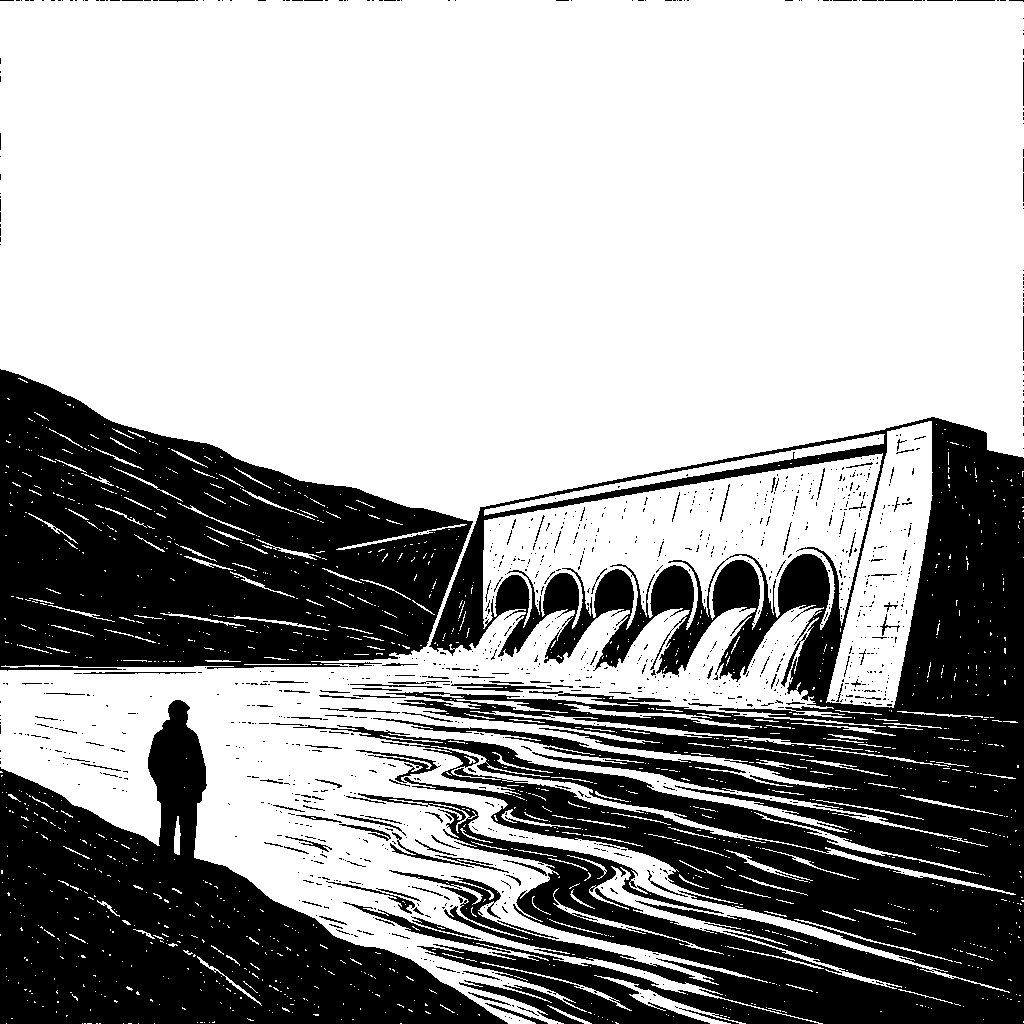
“The river is no longer really a river. It is a source of energy.”
A river forced into pipes at a dam shows a living thing turned into something measured by what it delivers.
Heidegger looked at how technology changes the relationship between people and the world.
Think about a farmer, in the old way. The farmer works with nature. He understands the soil, the seasons, what the land can give. Now think about an industrial power station. The river is no longer really a river. It is a source of energy. Everything is measured by what it can deliver, and we lose something we used to have.
Heidegger called this way of seeing the world “enframing”. Everything is seen through the lens of what it can do for us. He had a name for the result too: “standing reserve”, where everything becomes a resource waiting to be used.4
This is where it gets close to our world. What happens when we look at people the same way? A customer becomes a conversion. An employee becomes a capacity. A user’s attention becomes engagement. We already see this language in dashboards, reports and business systems.
An agent will happily optimise whatever we tell it to optimise. If we measure people as resources, the agent will treat them as resources. That is not a problem of the AI model. It is a problem in how we design the system in the first place.
Technology does not only change what we can do. It changes what we see, including how we see each other.
What disappears
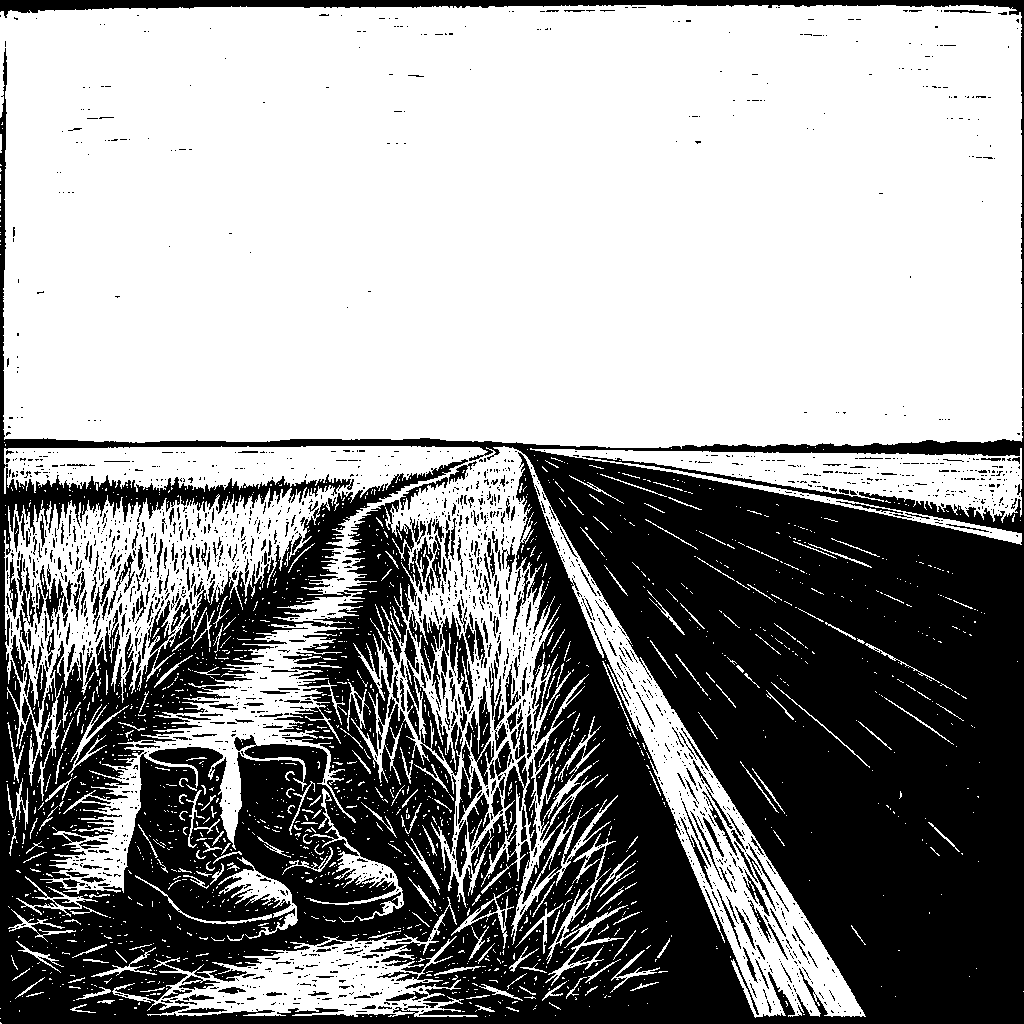
“The car lets you travel further and faster, and it took away a lot of walking.”
A fading path beside the road, with boots left behind, shows what we stop practising once something easier arrives.
Take everyday things. The car lets you travel further and faster, and it took away a lot of walking. The phone lets you reach almost anyone, almost anywhere, and it took away the ability to be unreachable. The word processor made documents much easier, and it changed the skills people need to work in an office.
We talk endlessly about what new technology gives us. It goes in the launch announcement, the marketing campaign, the product demo. We rarely spend the same time on what disappears.
In the study of technology there is a concept called affordances: the possibilities for action that a technology creates. When we design agents, we should pay equal attention to the other side. What are we removing? What are we no longer practising? What are we handing over, so that we eventually forget how to do it?67
Foucault had an interesting view on power. He was suspicious of systems that exercise power while presenting themselves as neutral. I think that is worth remembering. An agent that is “simply making things easier” may also be making certain choices for us.8
So perhaps we should not only ask whether the tool works. We should also ask what happened to the people using it. The feature is half of the story. We need to write the other half.
Three agents
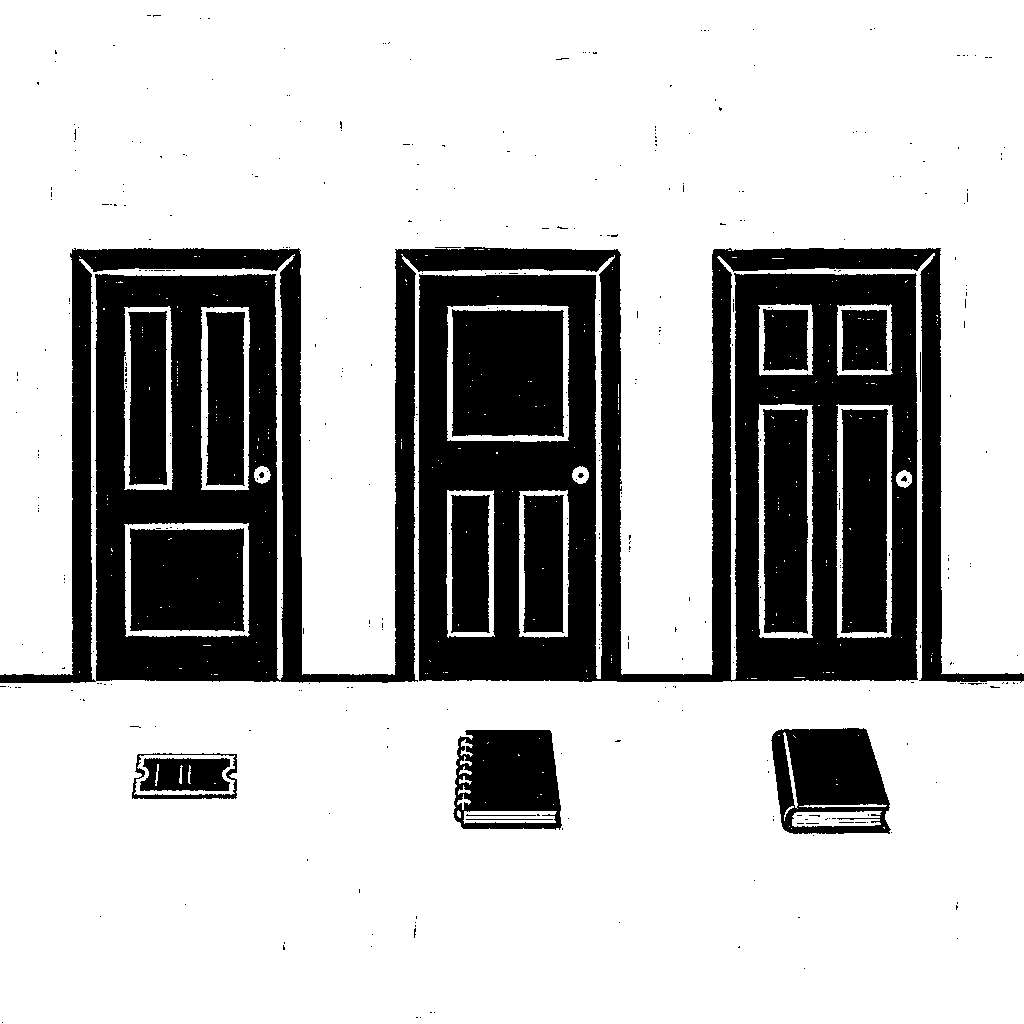
“I think three kinds of agent make this obvious.”
Three doors with one object each stand for the three agents, and each stays closed because the cost is hidden behind it.
Back to the customer support example. I think three kinds of agent make this obvious.
The support agent. It answers tickets automatically and closes the issues. It works around the clock, so response is faster, costs are lower, and it can support many languages. What it takes away is the apprentice: the chance for someone new to learn the product by dealing with real customer problems.
There is a design decision hiding here. Does the agent close the ticket completely? Or does it prepare the answer, so a human reviewer learns from it and takes responsibility? That is how we decide how much we take away, and how much we leave for a human to decide and learn from.
The meeting agent. We all know this one. It joins the meeting, records everything and produces a nice summary. Nobody needs to take notes. People who could not attend can catch up. Brilliant.
But what else are we giving away? The reason to listen properly in the first place.
Simone Weil wrote a lot about attention. She believed that paying attention was one of the most important things we can do. Listening is not only collecting information. It is noticing things, questioning them, understanding why someone disagrees, sometimes changing your mind. A summary gives you the information, but not the experience that led to it.9
So here is a design question. Should the agent simply summarise the meeting? Or should it point to the biggest disagreements, or the questions that still need human judgement? Those are two different products.
The recommendation agent. This one is less noticeable. It learns what you like and starts choosing what you should watch, read, listen to or buy next. It gets very good at predicting what you will enjoy. It is convenient, personal, and saves searching.
But think about the most interesting things we experience. A book someone put in your hands. Music you found by accident. An idea you disagreed with that still changed what you think. A recommendation system can narrow your world without you noticing.
Steven Case (the name is unclear in my recording) says freedom is not only being able to choose. It also depends on having options to choose from, and being able to consider them. These agents quietly decide which options you get to see. They have influenced your freedom before you make a decision.
Again there are architecture questions. How many options should the agent show? Should it sometimes recommend something completely outside your usual interest? This is not only a technical question. It is about what kind of experience we want people to have.
What each agent gives and what it takes away
What it gives
- Support: faster, cheaper, many languages
- Meeting: nobody needs to take notes
- Recommendation: convenient, saves searching
What it takes away
- Support: the apprentice
- Meeting: the reason to listen properly
- Recommendation: the options you get to see
Write down what it takes

“For every feature, write down what it gives and what it takes away.”
A page with one column filled and the other still blank shows the half of the story we usually skip.
None of this means we should not build these agents. It means we should understand what we are building beyond the feature list.
For every feature, write down what it gives and what it takes away. If you cannot, perhaps you do not understand the feature yet. We need to know what we are taking and what we are giving.
Not against technology
I do not want this to become an argument against technology. That would be only half of the story.
Technology freed us from an
 The origin
Written 7 November 2026, never edited. It starts like this:
1. Every AI Agent Takes something away. Decide what, before you built it. 2. At home was a couple of day of taking notes readon about heidegger and couple podcasts. 3. Again reason with Heigegger digging a bit more onlne keep us with all those names. 5. Steve cave. 6. Part of a paradox with all reading I did/ 7.…
Sources
- 1
"Technology is neither good nor bad, it depends what you use it for" (the saying Victor calls an excuse)
The historian who gave this saying its best-known form: "Technology is neither good nor bad; nor is it neutral." His version adds "nor is it neutral", which supports Victor's point. A short biography and his six laws of technology.
- 2
Aristotle's four causes (what it is made of, its form, who made it, what it is for)
A scholarly entry on the four causes, with a section on the final cause (purpose) and why Aristotle ranks it so high. This is the door for "the purpose comes first."
- 3
Aristotle's four causes (same claim, easier read)
A plain summary of the material, formal, efficient and final causes, and where they appear in the *Physics* and *Metaphysics*.
- 4
Heidegger on technology: "enframing" and "standing reserve"
The Question Concerning Technology
An overview of Heidegger's essay. It explains standing-reserve (humans included) and *Gestell*, translated as "enframing".
- 5
Heidegger: the technological view that makes everything a resource
Martin Heidegger, section 5.2 "Technology"
A scholarly account of *das Gestell* and why it is hard to translate. It also covers the danger of technology and a section on criticisms of Heidegger's view.
- 6
"Affordances", the possibilities for action that a technology creates
The origin of the term in perceptual psychology, and how it moved into design and human–computer interaction.
- 7
Affordances (the original and the design use)
Compares Gibson's meaning (action possibilities offered by the environment) with Donald Norman's design use. It names Gibson's book *The Ecological Approach to Visual Perception* as the source.
- 8
Foucault, suspicious of systems that exercise power while presenting themselves as neutral
A scholarly entry on Foucault's work on power. It shows how institutions built for harmless purposes came together into modern disciplinary power.
- 9
Simone Weil, who wrote about attention as one of the most important things we can do
Calls "attention" Weil's central ethical concept and says it informs her later social and political thinking.
How this was made
The agents that worked on this post, read from its ledger, where every run is recorded as it happens and cannot be changed afterwards. Recorded since 7 November 2026.
- InterviewAsk the few questions a stranger would need answered before the origin makes sense.
- StructureFind the message, the idea and the small ideas in an origin, each tagged with its themes.
- ConvertWrite each version a reader might take in: short, long, a social post, another language.
- ImageDraw one linocut print per section that earns one, in the house style.
- DiagramDescribe a diagram for the few places in a post where a process reads better as boxes.
- CitationsFind what each claim in a post rests on and link to it where the name appears.
- SeoCheck that each page says what it is the way search and answer engines read it.
- DrilldownWrite a short wiki page for each book, person, tool or project a post leans on.
- SafetyRead everything about to leave, in every language, for hate, contempt or an attack, and hold it if found.
- SecurityCheck what is about to leave for other people’s data, secrets and internal links, and hold it if found.
- VoiceRead the short version aloud in one steady voice and record when each word is spoken, so the page can follow along.
- PublishAssemble one pull request a reviewer can read in a minute, and record the road.
13 agent runs recorded. How the agents work
After this thought
Walk the road for the whole piece, or open the original to see the note it all came from.